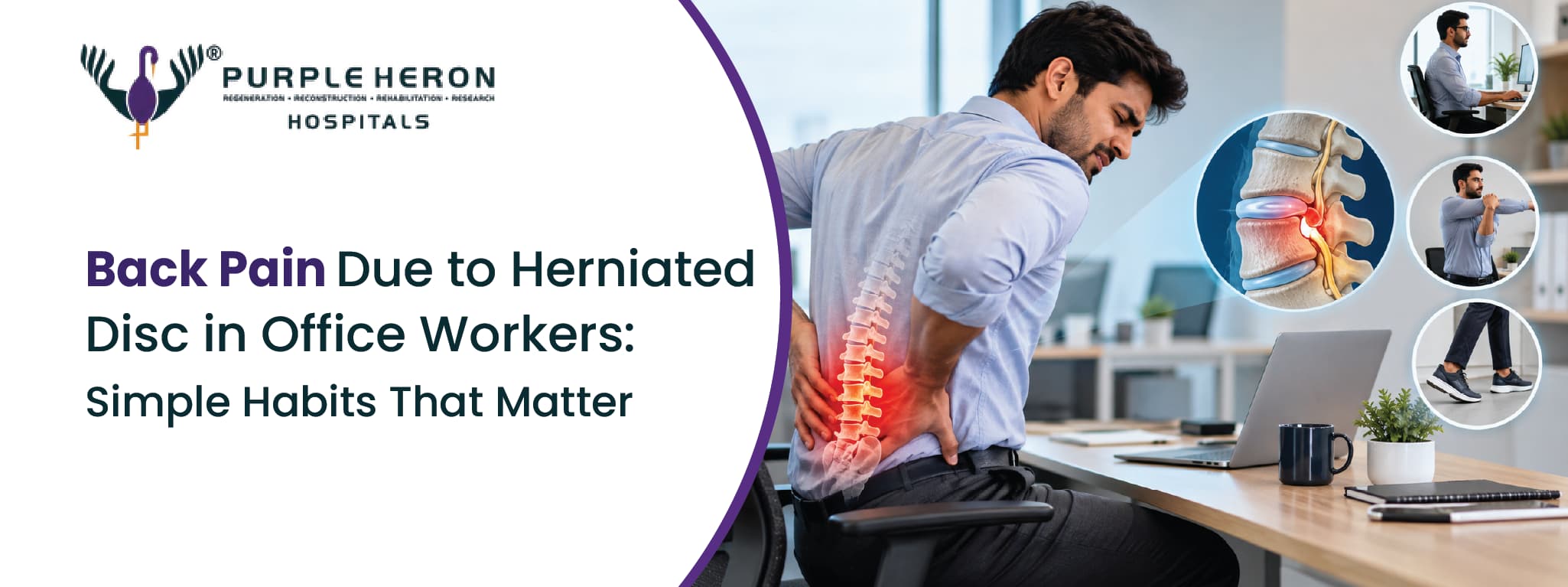

If your back pain consistently flares up by 4 PM and only begins to ease over the weekend, your desk job is likely playing a central role. While herniated discs are often linked to heavy lifting or athletic injuries, modern desk environments quietly create the exact conditions for spinal stress. Sitting uninterrupted for hours places continuous, uneven pressure on your lower lumbar discs, gradually weakening their protective outer walls until routine movements trigger sudden pain or nerve irritation.
For office professionals, back pain from a disc bulge is rarely an overnight accident; it is the cumulative result of prolonged posture strain, sedentary work habits, and screen fatigue. Understanding how everyday workplace routines affect spinal alignment empowers you to take control. By adopting simple, targeted habits and knowing when to consult a specialist, you can protect your spinal health, relieve radiating discomfort, and keep mild disc issues from progressing into chronic daily challenges.
Why Office Workers Are Especially at Risk
Herniated discs are usually associated with heavy lifting or sports injuries, but sitting is quietly one of the bigger contributors and desk jobs mean hours of it, daily. Sitting increases the load on the discs in your lower back more than standing does, and sitting without moving for four or more hours at a stretch can measurably affect disc health over time. Add a poorly adjusted chair, a screen positioned too low, or a habit of leaning forward toward the monitor, and the spine is under constant, low-grade strain that builds up long before pain shows up. This is why back pain due to herniated disc shows a specific pattern in office workers: it's rarely a single dramatic injury. It's cumulative weeks or months of posture and inactivity finally catching up, often triggered by something as ordinary as reaching for a bag or twisting to pick up a dropped pen.
How a Herniated Disc Actually Causes Back Pain
Each vertebra in your spine is cushioned by a disc with a tough outer layer and a softer, gel-like center. When that outer layer weakens or tears from prolonged pressure, poor posture, or sudden strain the inner material can bulge or leak out, pressing on nearby nerves. That pressure is what causes the pain, and depending on which nerve is affected, it can stay local to the lower back or travel down through the hip and leg, sometimes with tingling or numbness (commonly known as sciatica). This is also why herniated disc pain often feels different from ordinary muscle strain: it tends to worsen with sitting, coughing, or bending forward, and may ease slightly when lying down.
Simple Habits That Actually Matter in Recovery
This is the part most advice skips past. Treatment matters, but for office workers, the daily habits around a desk job are what determine whether a mild disc issue stays mild or turns into a chronic problem.
Fix Your Chair and Screen Setup, Not Just Your Posture
Telling yourself to "sit up straight" rarely works for eight hours. What actually helps is a chair with real lumbar support, your screen at eye level so you're not leaning forward, and your feet flat on the floor. Get the setup right once, and good posture becomes the default instead of something you have to consciously maintain all day.
Break the Sitting Streak Every 30–40 Minutes
Set a recurring reminder, take calls standing up, or just get up to refill water. Even a two-minute walk resets the pressure on your lower spine and keeps blood flowing to the discs. This one habit, done consistently, matters more than almost anything else on this list.
Build Core Strength Before the Pain Forces You To
Your core muscles are what take load off your spinal discs during everyday movement. Simple exercises planks, pelvic tilts, bridges done a few times a week build the support system your back needs, especially if your job doesn't naturally involve movement.
Bend and Lift the Right Way, Even for Small Things
Most people are careful lifting something heavy but careless picking up a bag or bending to tie a shoe. Bend at the knees, not the waist, and keep the load close to your body. Disc injuries from "small" movements are common precisely because people don't think of them as risky.
Don't Power Through Ongoing Pain
Pushing through discomfort because of a deadline is one of the most common reasons mild back pain becomes a chronic issue. Persistent pain is the spine's way of signaling that something needs attention ignoring it usually means a longer, harder recovery later.


When Habit Changes Aren't Enough
Lifestyle changes help, but they're not a substitute for medical evaluation if the pain has moved past the mild-and-manageable stage. Get assessed by a specialist if you notice:
-
Pain radiating from the lower back into the hip, thigh, or leg Numbness, tingling, or weakness in the leg or foot
-
Pain that doesn't ease with rest or improves only briefly Difficulty standing upright or a noticeable change in how you walk
-
Loss of bladder or bowel control (this needs same-day medical attention)
None of these mean surgery is automatically next but they do mean it's time for a proper diagnosis instead of guessing.
Expert Spine & Musculoskeletal Care at Purple Heron Hospital
Persistent back discomfort should never be managed with guesswork. At Purple Heron Hospital, clinical evaluation focuses on pinpointing the precise anatomical source of distress, identifying the exact vertebral level, nerve involvement, and mechanical strain rather than treating back pain as a generic issue.
Led by Dr. Aayushi Choudhary, our Pain, Musculoskeletal Medicine & Rehabilitation department adheres strictly to a minimum-intervention philosophy:
-
Precise Clinical Triage: Detailed physical assessments and advanced diagnostic imaging (MRI/CT) to assess disc integrity and nerve canal space.
-
Targeted Conservative Therapy: Individualized rehabilitation protocols combining spine-stabilizing physiotherapy, manual therapy, and ergonomic posture retraining.
-
Precision Image-Guided Injections: Ultrasound- or C-arm fluoroscopy-guided epidural or facet injections to calm localized nerve inflammation when medication alone falls short.
-
Responsible Surgical Thresholds: Surgery is never the default; it remains reserved exclusively for cases with progressive neurological deficits or structural instability unresponsive to structured conservative trials.
Take the Next Step Toward Lasting Relief
If lower back pain, disc stiffness, or radiating leg discomfort is beginning to disrupt your workday, commute, or sleep, early clinical guidance prevents minor nerve irritation from turning into a chronic impairment.
Chat with our medical care assistant for quick guidance and support. Connect directly through our patient portal at Purple Heron Hospital to schedule a comprehensive evaluation, review your symptoms, or determine whether your condition requires targeted specialist care or structured posture rehabilitation.
Recovery Timeline: What to Realistically Expect
Most herniated disc-related back pain in office workers improves meaningfully within 4–6 weeks once the right combination of physiotherapy, ergonomic changes, and (if needed) targeted treatment is in place. Cases caught early, before nerve involvement sets in, tend to recover faster and with a lower chance of recurrence. The exact timeline depends on how long the pain has been present and how consistently the treatment plan is followed, which is exactly why an early, accurate diagnosis matters more than trying to push through it alone.