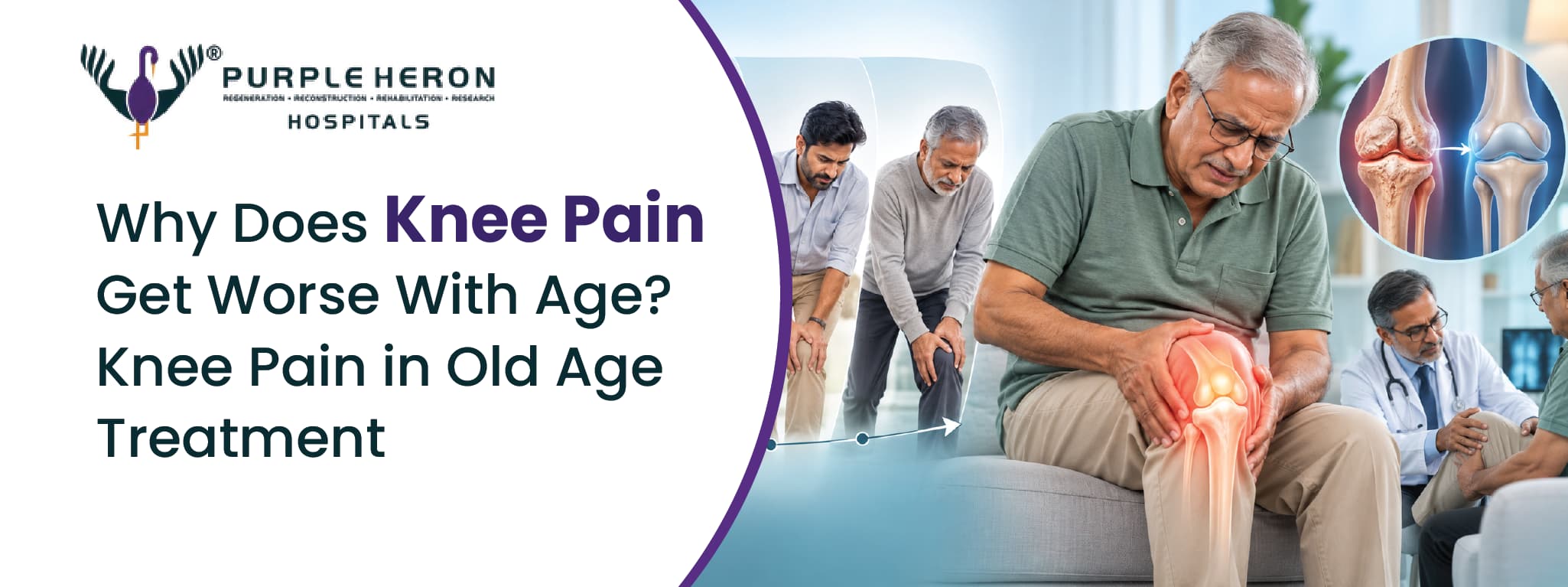

Most people treat knee pain as an unavoidable fact of getting older. When climbing stairs, standing up from a low sofa, or taking a short walk starts to hurt, it is easy to think your joints are simply worn out for good.
Getting older does not mean you have to live with constant pain. While decades of walking and naturally weaker muscles put extra stress on your knees, aging alone is rarely the whole story. Far too often, seniors are handed an unfair choice: take painkillers every day and just deal with it, or book a major knee replacement surgery.
Today’s pain and rehabilitation medicine offers a better way. Knee replacement should always be the last step, not the first reaction. By pinpointing the exact reason your knee hurts whether it is a loss of joint cushion, loose ligaments that make the joint wobble, or an uneven walking style specialists can treat the root problem without major surgery. With modern, minimally invasive care, you can protect your natural joint and get back to walking comfortably.
Why Knee Pain Gets Worse as We Age: What Is Really Going On?
Your knees carry your entire body with every step, handling two to four times your body weight whenever you walk. Over the decades, a few gradual physical changes happen at the same time:
- Cartilage Thins and Joint Fluid Dries Up
Smooth cartilage covers the ends of your leg bones, while natural joint fluid acts like motor oil to keep everything gliding smoothly. As time goes on, that cartilage layer naturally thins down and the joint produces less fluid. Without this protective cushion, the bones move closer together and rub against each other, creating that familiar morning stiffness and dull ache.
- Leg Muscles Lose Their Strength
Your thigh and hip muscles act like built-in shock absorbers. Every time your heel hits the ground, strong muscles take the impact so your joint doesn't have to. After age 50, muscle mass naturally drops. When these muscles lose strength, that heavy impact falls straight onto the knee cartilage and bone.
- Ligaments Loosen and the Knee Wobbles
The tough bands holding your knee together (the ligaments) can stretch out and lose firmness over time. Even a tiny bit of looseness makes the joint unstable during daily movement. When the knee wobbles as you walk, the cartilage wears down unevenly, and the surrounding tendons end up strained and sore.
- Extra Weight Multiplies the Stress
Every extra kilogram you carry adds about three to four kilograms of extra force across your knees when walking. If you also have flat feet or a slight limp, that extra pressure gets focused right on one side of the knee, speeding up wear and tear.
Common Reasons for Knee Pain in Seniors
Knee pain is not identical for everyone. Finding the true source of the ache is the fastest way to get lasting relief without unnecessary procedures:
-
Osteoarthritis (Wear-and-Tear Arthritis): The most common diagnosis after 50. The protective cartilage wears thin, small bony bumps (spurs) form, and the joint lining gets inflamed. The pain is usually worse by the end of the day or after taking stairs.
-
Degenerative Meniscus Tears: The meniscus is a rubbery cartilage pad that absorbs shock. In mature knees, it gets brittle and can tear during ordinary tasks—like turning around too quickly or getting up from a squat—leaving a sharp, tender spot or a catching sensation.
-
Inflammatory Arthritis (like Rheumatoid Arthritis): An autoimmune condition where the body’s immune system attacks the joint lining. It usually affects both knees, causing warmth, swelling, and morning stiffness that lasts for hours.
-
Tendon Inflammation (Bursitis): Tender, burning pain just below the inside of the knee often doesn't come from the bone at all. It usually comes from irritated hamstring tendons and the small fluid sacs (bursas) that cushion them.
Referred Pain from the Back or Hip: A pinched nerve in your lower spine or a stiff hip joint can send pain straight down into your knee. If your knee joint itself looks healthy on an X-ray, the true problem is often higher up.


Dr. Aayushi Choudhary’s Approach: Preserving Your Natural Joint
At Purple Heron Hospital in Jaipur, the main goal is Joint Preservation. Instead of relying on short-term pain pills or jumping straight to surgery, Dr. Aayushi Choudhary combines targeted rehabilitation, precise image-guided treatments, and regenerative biological therapies.
1. Fixing Your Walking Pattern and Using Custom Supports
-
Healing an aging knee starts by taking unnecessary physical pressure off the painful spots.
-
Walking and Footwear Check: We analyze how your feet land to see if your knees are twisting inward or outward with each step.
-
Custom Shoe Insoles: Special medical insoles help correct how your foot strikes the ground, shifting weight away from the sore side of your joint.
-
Offloader Knee Braces: These specialized braces gently lift pressure off the worn-down side of the joint, creating a little breathing room between the bones so you can walk with immediate comfort.
2. Joint Lubrication Under Ultrasound (Viscosupplementation)
When your natural joint fluid runs low, a gel-like substance called Hyaluronic Acid can be placed directly into the knee space.
-
Think of it like adding fresh oil to a dry door hinge. It restores cushioning, reduces friction, and allows the bones to glide smoothly again.
-
Dr. Aayushi uses real-time ultrasound or X-ray guidance for every injection. This ensures the fluid goes precisely into the joint cavity rather than into the surrounding fat or muscle.
3. Regenerative Medicine and Natural Healing
For joints with mild-to-moderate cartilage thinning or partial tears, modern biological treatments help calm inflammation and support natural recovery:
-
Stem-Cell-Based Biological Therapies: For carefully selected patients, concentrated cell therapies (drawn from your own bone marrow or tissue) help create a calm, healthy joint environment, reduce painful inflammation, and protect remaining cartilage.
-
Platelet-Rich Plasma (PRP) and Growth Factors: A small sample of your own blood is processed to concentrate natural healing proteins. When placed into the joint or around worn tendons, these growth factors soothe chronic swelling and support tissue repair.
-
Prolotherapy (Strengthening Loose Ligaments): A targeted sugar-water solution is injected around loose, stretched ligaments. This triggers a mild, natural repair response that tightens the supporting bands, stops the knee from wobbling, and slows down further joint wear.
- Stopping Pain Signals Without Surgery
For people dealing with severe, long-term pain—especially those who cannot safely have surgery or want to put it off for years—modern pain procedures can switch off pain signals directly:
-
Genicular Nerve Blocks: Under ultrasound guidance, a small amount of numbing medicine is placed around the tiny sensory nerves that carry pain messages from the knee to the brain.
-
Radiofrequency Treatment (RFA): If the numbing block brings clear relief, gentle heat energy is used to calm those same sensory nerves. This provides long-lasting pain relief for 6 to 18 months without weakening your leg muscles.
-
Targeted Cold Therapy (Cryoneurolysis): A specialized needle delivers pinpoint cold to freeze and quiet the pain nerves, bringing extended relief without heat or surgery.
-
Targeted Nerve Blocks: Gentle blocks around specific nerve pathways (like the adductor canal) to stop severe pain flare-ups while keeping your walking muscles fully active.
- Targeted Physical Therapy and Rehabilitation
"Regeneration without rehabilitation doesn't last." Injections and pain treatments open up a window of relief; custom exercises make sure that relief stays for the long haul.
-
Muscle Strengthening: Instead of random gym exercises, therapy focuses on rebuilding the exact thigh and hip muscles that protect your knees.
-
Balance and Stability Training: Gentle routines that train your joints to react quickly, preventing sudden slips and twists.
-
Advanced Equipment: Jaipur’s specialized rehabilitation tools, including robotic walking aids and guided movement training, help your legs learn to move smoothly again without overloading worn cartilage.
When Is Knee Replacement Actually the Right Choice?
Knee replacement surgery is a valuable procedure, but it should not be rushed into.
Surgery is usually only needed when:
-
Your X-rays show complete "bone-on-bone" wear across the entire joint, and the leg has developed a severe bow or bend.
-
You have completed a structured program of image-guided treatments, regenerative options, and rehabilitation without getting enough relief.
-
Severe pain wakes you up repeatedly at night or keeps you from walking across your own living room.
-
If you can still bend and straighten your leg and haven't tried a structured, non-surgical treatment plan yet, preserving your natural joint is usually the safer choice.
Warning Signs That Need Quick Doctor Attention
While most knee stiffness builds up slowly over months or years, you should see a doctor right away if you notice:
-
Sudden, heavy swelling that pops up in just a few hours
-
Your knee gives out completely, locks up, or refuses to straighten
-
The joint looks red, feels hot, and comes with a fever
-
Severe pain alongside swelling and redness in your calf (a possible sign of a blood clot)
-
Sudden numbness, tingling, or weakness running down into your foot
Joint Preservation at Purple Heron Hospital, Jaipur
At Purple Heron Hospital in Jaipur, knee care is guided by Physical Medicine & Rehabilitation (PM&R) and Interventional Pain specialists.
Led by Dr. Aayushi Choudhary (MBBS, MD PMR – Gold Medalist, Fellow in Interventional Pain Management), the focus is always on diagnosing the true source of your pain. Rather than treating an X-ray, the team performs a detailed physical check, ultrasound exam, and walking assessment to see if your natural joint can be saved.
By bringing ultrasound-guided treatments, biological options, nerve-targeted pain relief, and customized physical rehabilitation together in one place, Dr. Aayushi helps seniors avoid major surgery and walk with ease again.
What Does Realistic Progress Look Like?
Saving your joint is a step-by-step process, not an overnight fix:
Weeks 1 to 3: Image-guided treatments, lubricating gel injections, or targeted nerve blocks break the pain cycle and calm inflammation so you can move without wincing.
Weeks 4 to 8: With pain dialed down, custom exercises and insoles correct your walking style and build supportive muscle strength around the joint.
Months 3 to 6: Regenerative treatments, paired with consistent movement, help stabilize the joint and deliver steady, long-term walking comfort.
Your knees naturally change over the years, but with an accurate diagnosis and modern, targeted care, staying active and walking without pain is well within reach.
If you want to explore non-surgical options or get a clear second opinion on your knee pain, the team at Purple Heron Hospital can review your scans and help you map out a personalized joint preservation plan