
Most neck pain starts small. Maybe it is a dull ache from looking down at your phone, or stiffness after working at your laptop all day. But when that stiffness turns into sharp, daily pain, everyday tasks become exhausting.
When neck pain won’t go away, people usually think they only have two choices: push through the pain and hope it disappears, or worry that seeing a spine doctor means surgery.
The truth is, you rarely need surgery. Today, modern pain specialists use simple, targeted treatments to calm the exact spot that hurts. By finding the exact source of your pain early, we can help you get back to your life quickly and safely without major surgery.
Finding the Exact "Pain Generator"
Many people spend weeks trying rest, heat packs, neck traction, and general exercises with little relief. Why? Because neck pain isn't just one generic problem.
To fix the pain, we have to find the exact structure causing it what doctors call the pain generator.
At Purple Heron Hospitals, Dr. Aayushi Choudhary focuses on pinpointing whether the pain is coming from an inflamed joint, a pinched nerve, a worn disc, or an irritated muscle. Once we know the exact cause, we treat that specific spot instead of just guessing
Common Anatomical Causes of Cervical Pain
Before an interventional plan is designed, a detailed clinical examination identifies the primary underlying pathology:
-
Cervical Spondylosis & Facet Arthropathy: Age-related degeneration of the discs and facet joints in the neck. Arthritic changes in these small stabilizing joints often cause localized neck stiffness that worsens when turning the head or looking upward.
-
Cervical Disc Bulge & Herniation: When a cervical intervertebral disc protrudes, it can impinge on existing spinal nerves, triggering radicular pain that radiates into the shoulder, arm, or fingers alongside numbness or tingling.
-
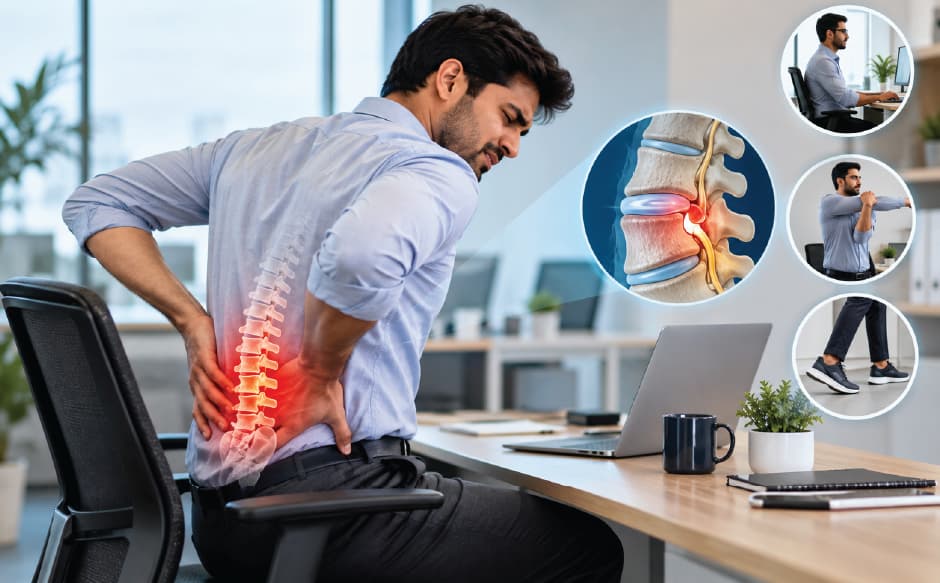
Postural Strain & "Tech Neck": Prolonged forward-head posture creates sustained mechanical tension across the posterior cervical musculature and stabilizing ligaments, predisposing the spine to premature degenerative wear.
-
Myofascial Pain Syndrome: Persistent taut bands and hypersensitive trigger points within the trapezius and levator scapulae muscles that refer pain into the neck, upper back, and head.
-
Whiplash & Ligamentous Strain: Acceleration-deceleration injuries that overstretch cervical ligaments and joint capsules, creating long-standing joint instability and inflammatory discomfort.
Minimally Invasive & Image-Guided Interventions: How They Work
Targeted pain procedures are not an afterthought or a "last resort" considered only after weeks of physical therapy have failed. If you are experiencing severe, shooting nerve pain down your arm or dealing with an acutely inflamed joint, an image-guided procedure early in your care plan can quickly bring down swelling, stop the pain cycle, and help you start moving again.
At Purple Heron Hospital, Dr. Aayushi Choudhary performs these procedures using live imaging guidance rather than blind injections. This ensures the medication goes to the exact millimeter where it is needed while keeping surrounding blood vessels and nerves safe.
C-Arm Fluoroscopy: Real-Time Precision and Safety
A C-arm is an advanced imaging system that provides live X-ray video during the procedure, removing any guesswork.
-
Pinpoint Accuracy: The specialist tracks the needle tip in real time, using contrast dye to confirm the medication reaches the exact nerve target while protecting nearby blood vessels.
-
Quick & Comfortable: Performed under local anesthesia, the procedure takes just 15 to 30 minutes with no surgical cuts, stitches, or overnight hospital stay.
Cervical Epidural Injections: Calming Irritated Nerves
When a bulging or herniated disc presses on spinal nerves, it triggers burning pain, numbness, or tingling down into the arm.
-
Targeted Delivery: Using C-arm guidance, anti-inflammatory medication and a local anesthetic are placed directly into the epidural space around the irritated nerve.
-
Direct Relief: It calms localized nerve swelling far faster than oral pills, providing weeks to months of comfort so you can actively engage in physical therapy.
Cervical Facet Injections and Radiofrequency Ablation (RFA)
Arthritis in the neck's small stabilizing joints (facet joints) often leads to chronic aching and stiffness when turning your head.
-
Diagnostic Nerve Blocks: A tiny dose of numbing medication is placed on the joint's sensory nerves. Immediate relief confirms the exact joint causing your pain.
-
Radiofrequency Ablation (RFA): Once confirmed, gentle heat energy temporarily quiets those pain-sensing nerves, delivering sustained relief for 6 to 18 months without affecting muscle strength or neck stability.
Ultrasound-Guided Nerve & Muscle Injections
For soft-tissue problems outside the spinal canal, high-resolution ultrasound allows the specialist to view muscles, tendons, and superficial nerves in real time without radiation.
-
Trigger Point Injections: Precise release of chronic muscle knots in the trapezius and upper back muscles that do not respond to massage or stretching.
-
Occipital Nerve Blocks: Calming irritated nerves at the base of the skull to relieve cervicogenic headaches and pain radiating over the scalp.


Regenerative Medicine: PRP and Cell-Based Therapies
For selected musculoskeletal, ligamentous, and degenerative joint conditions, regenerative medicine offers promising supportive pathways. Autologous therapies, such as Platelet-Rich Plasma (PRP) and orthobiologic solutions, concentrate growth factors from the patient’s own blood to assist natural tissue healing.
These therapies may be considered in carefully selected candidates with chronic ligamentous laxity, mild-to-moderate facet joint degeneration, or persistent tendinopathies. Rather than promising unrealistic cures or total disc regeneration, the clinical goal is to reduce chronic inflammatory cascades, support tissue integrity, and improve functional stability alongside an integrated rehabilitation plan.
Rehabilitation After Targeted Treatment
While precision interventions control severe inflammation and relieve nerve irritation, comprehensive rehabilitation ensures lasting functional recovery. Once acute discomfort is alleviated, an integrated therapy program helps prevent future recurrences:
-
Targeted Physiotherapy: Deep cervical flexor strengthening, scapular stabilization, and gentle range-of-motion routines designed to support the cervical spine.
-
Ergonomic Retraining: Optimizing monitor height, chair lumbar support, and desk posture to minimize static loading during prolonged work hours.
-
Posture Correction & Mechanical Traction: Directed stretches and gentle intermittent traction to alleviate postural muscle fatigue and maintain joint mobility.
-
Short-Term Medical Support: Judicious, short-course prescription medications (such as mild anti-inflammatories or neuropathic modulators) used strictly to assist initial symptom control while active recovery progresses.
Warning Signs That Require Immediate Specialist Evaluation
While most cervical spine conditions can be managed non-surgically, specific red-flag symptoms necessitate prompt medical assessment to exclude severe neurological impairment:
-
Progressive muscle weakness in the shoulder, arm, or hand (e.g., dropping objects or difficulty gripping).
-
Persistent numbness or sensory loss extending down the arm.
-
Difficulty with fine motor tasks, balance instability, or gait changes (suggestive of cervical myelopathy or spinal cord compression).
-
Neck pain accompanied by unexplained fever, chills, or unintended weight loss.
-
Sudden-onset severe pain following a high-impact fall or vehicle collision.
-
Any bowel or bladder dysfunction accompanying spinal symptoms.
When Is Surgery Truly Needed?
Our clinical rule is simple: the minimum intervention needed to get you well.
We don't avoid surgery at all costs, but we keep it strictly for cases that truly require it. If scans show that your spinal cord is being compressed, or if muscle weakness is getting worse, we will promptly connect you with an expert spine surgeon. If those severe issues aren't present, minimally invasive care is almost always the right first step.
Expert Neck Care at Purple Heron Hospital
Navigating persistent cervical spine discomfort requires an accurate clinical diagnosis rather than short-term symptom suppression. At Purple Heron Hospital, consultations begin with a thorough orthopedic and neurological assessment to isolate the exact structural driver of your pain, distinguishing between facet joint irritation, muscle spasm, disc herniation, and nerve root impingement.
Led by Dr. Aayushi Choudhary, our Pain, Musculoskeletal Medicine & Rehabilitation department follows an evidence-based, minimum-intervention philosophy:
-
Comprehensive Clinical Evaluation: Targeted physical examinations evaluating cervical range of motion, nerve conduction, and posture alignment, supplemented by precision imaging (X-ray, 3T MRI) when needed.
-
Precision Image-Guided Interventions: High-precision C-arm fluoroscopy- or ultrasound-guided injections, medial branch blocks, and radiofrequency procedures to calm inflamed nerve pathways with minimal tissue disruption.
-
Regenerative Orthobiologics: Evidence-informed PRP and biologic options evaluated for carefully selected degenerative and soft-tissue indications.
-
Integrated Functional Rehabilitation: Stepwise physical therapy protocols to restore spinal mobility, build postural endurance, and maintain long-term recovery once pain is resolved.
Take the Next Step Toward Neck Pain Relief
If neck stiffness, radiating shoulder discomfort, or "tech neck" headaches are interfering with your focus, sleep, or daily activities, early medical evaluation ensures rapid recovery and prevents chronic nerve compression.
Chat with our medical assistant for quick guidance and support. Visit Purple Heron Hospital to connect with our care team, discuss your symptoms, and schedule a specialist consultation with Dr. Aayushi Choudhary.